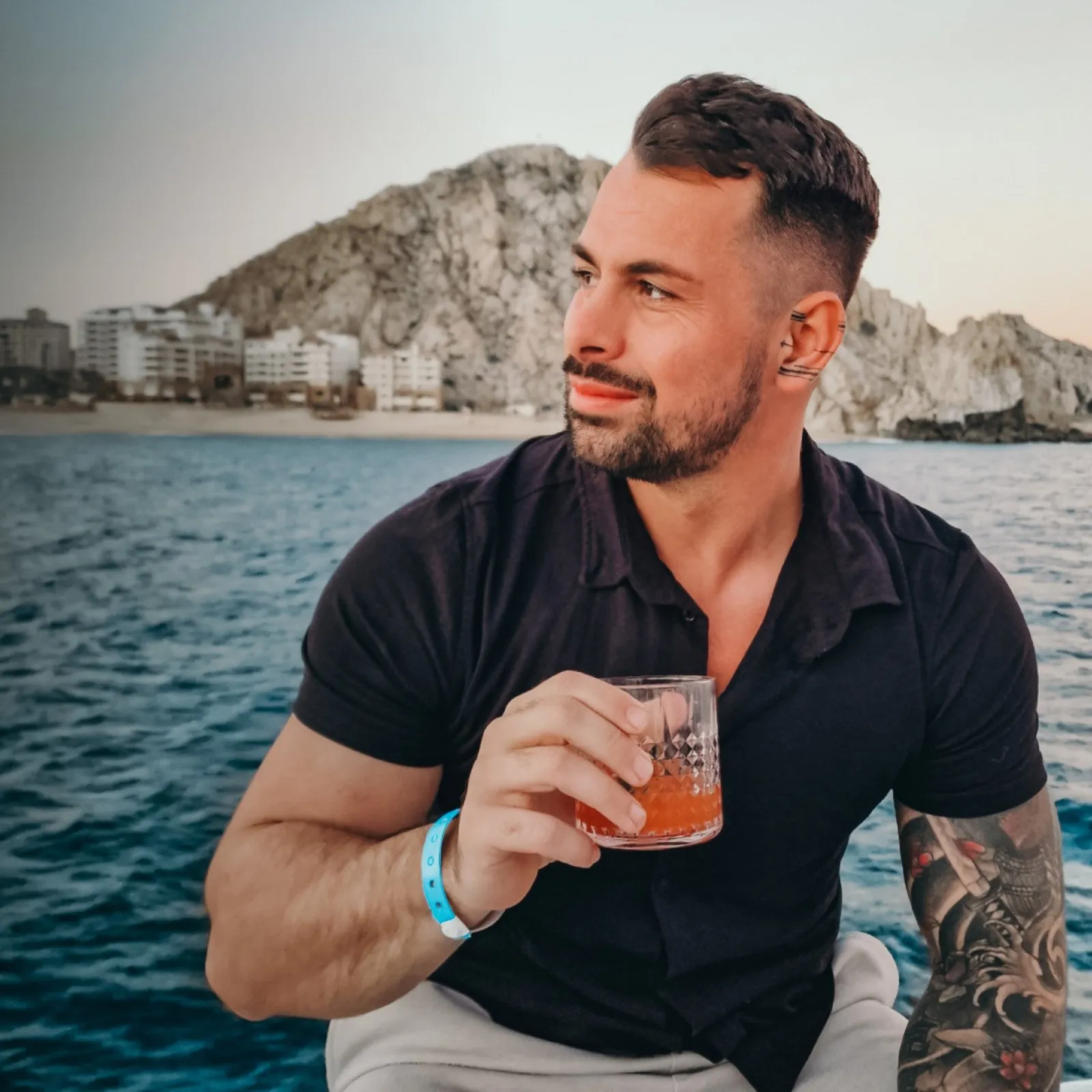
I'm Ash Kemp. These days I run businesses where AI agents do most of the work, and I run them from Dubai. I started on a paper round in the South Wales valleys. This page is the long version of how I got from one to the other. The short one is on my about page.
Growing up in the South Wales valleys
We didn't have much. My mum was a school teacher. My dad was a web designer, and for a long stretch a chef as well, and a self-employed web designer in the valleys selling websites for £150 doesn't make an easy living. There were three of us kids, me, my brother and my sister, in a small house up in the mountains. We moved around a lot for school, with spells in France, England and Ireland, but Wales is where I spent most of my childhood.
I never had pocket money, so I made my own. My first job was a paper round. I walked miles up and down the mountains every day in the rain and the snow, for about £15 a week. The papers had to go out however icy it was, and more than once I went down on my backside on a frozen hill. Christmas week was the good week, because about every fourth house gave me a £5 tip, which almost never happens in the UK.
At school I sold lollipops and sweets for a pound here and there, then spent the money on bigger multipacks and sold those too. I walked two miles to school and two miles back because we couldn't afford the bus, and I usually turned up soaked. I was 19 before I ate my first steak.
Joining the British Army at 16, and Afghanistan at 18
I left school at 16 and went straight into the British Army. I could do rifle training at 16 but I couldn't buy Call of Duty, because I wasn't old enough.
I loved being a soldier. I liked the hard training and the feeling of being good at something difficult, and I really wanted to go to Afghanistan. In 2012, at 18, I went. My tour was fine, as tours go. Nothing dramatic happened to me, and we helped local people with things like school builds.
Afterwards I had about two and a half months of leave and some money saved, because there was nothing to spend it on in Afghanistan. For the first time I travelled properly on my own: a run of European countries, then Thailand in January 2013. I backpacked, walked along beaches drinking coconuts and had a massage every day for a few dollars. I'd never felt that free, and I wanted it permanently.
Then I went back to my base in Germany. Within a couple of weeks I had the most disgusting, gut-wrenching feeling: I'm trapped. If I was lucky I'd go to another war in about four years, and the only way I'd see the world again was to survive it. Weekends could be cancelled at the last minute because someone else in the regiment messed up, even when I'd already paid for a flight home. I was on about £20,000 a year. I needed a way out, and the only one I could see was online.
My first $19 online, and the years of failing after it
A childhood friend of mine, Jordan, was one of the most technical people I knew. We pulled all-nighters together, drawing plans on whiteboards and trying to work out how anyone sold anything online. There were no courses or AI tools to lean on, and people trusted buying online far less than they do now.
One night we were sat in a university dorm in Swansea when an email came in at about 3am: "Cha-ching. You've made a commission." It was $19. Someone in America had bought a video training through a link we'd put on Facebook. We didn't know a single person who made money online, and we'd been told often enough that we were idiots for trying. I've had far bigger days since, and none of them compares to that $19.
Years of failing came next. I tried e-commerce, dropshipping, Fulfilled by Amazon, selling website and email traffic, sports betting, forex, and building websites for local businesses. I lost thousands and got scammed in ways I didn't know existed. I drew a green Lamborghini on the whiteboard on my barracks wall, and the lads laughed at me for it.
If you've wondered why my Instagram handle is @overdraft, it's because I lived in mine for years. At one affiliate conference a group of people far richer than me invited me out, and my share of the bill was £5,000. I had about £2,500 in my account and a £3,000 overdraft. I put my card down, acted cool and prayed. It went through, and I lived on 9p noodles for the next month. One of the people at that table later became my partner on a product launch, and that was the first time I was paid serious money.
What finally stuck was affiliate marketing and agency work. My first agency client found me on Upwork, and I built them a full sales funnel for about $30. I did every bit of it by hand, and everything that could break did. The integrations failed, the emails didn't send, the pages looked bad on mobile, the opt-ins didn't track and the Facebook ads were banned within days. That was the start of about ten years of agency work: funnels, paid ads, conversion work and Shopify builds, mostly for clients in America.
Leaving the army and building Online Empires with Brodie
Getting out of the British Army takes time. You apply, you sit interviews, and you're told you'll never earn this kind of money again and you're wasting your life. It took me about a year. By the time I was out, after six and a half years, I had already built a seven-figure business online on the side.
My family didn't understand it. The question I heard most was "When are you going to get a real job?" Nobody we knew made money on the internet, so most people assumed it was a scam or something worse. I've believed ever since that you shouldn't listen to anyone who doesn't have the life you want.
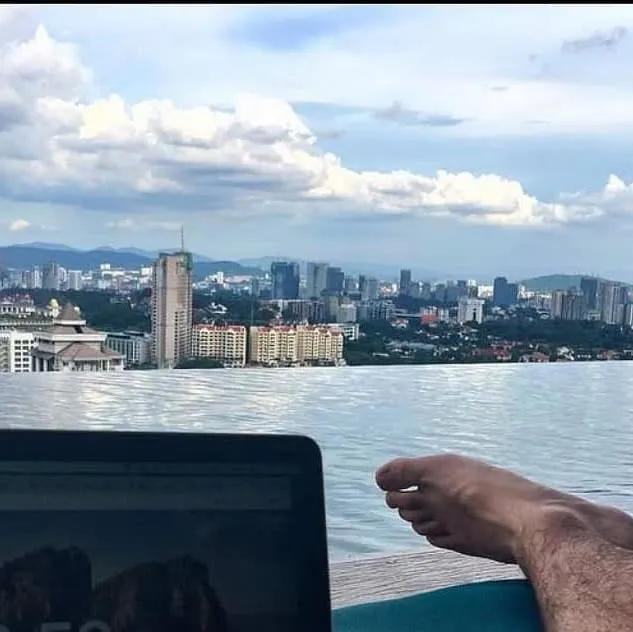
I've travelled full-time since 2014, more than 58 countries so far, and I've been back to Thailand every year since that first trip in 2013. During COVID I got talking to Brodie in a café in Thailand. We played table tennis most days and kept bouncing ideas around, and it became obvious that we were good at opposite things. Brodie likes being in front of the camera. I like being behind it, building the technology and the systems. Together we built the platform that became Online Empires, and more than 30,889 students have joined it.
Running it taught me who succeeds. Most people who join anything make no money, in every industry. The members who do well have some grit. When an ad account gets banned or an Instagram account gets restricted, they find another way. People make money or they make excuses, and they very rarely make both.
Dubai, AI agents and Agent Farming
I've lived in Dubai for about six years. The tax was part of the reason. The bigger reason was the people: nearly everyone I meet here runs a business of some kind, and that changes what you think is normal.
I've built a lot of businesses since that first $19. Funnels and Conversions grew into a multi-seven-figure agency. I built and exited an e-commerce store, sold my shares in a telehealth company, and built tools like VSLStats and PupPal along the way. Some I still run, and some I've put down on purpose. This year has been about going all in on what I'm best at: scaling an agency and teaching other people to build one. Everything I've started, and what state it's in, is on my ventures page.
My agency has a couple of people, and the rest of the team is AI agents that handle the client fulfilment. For a large art gallery I advise in the US, AI now handles more than 90% of incoming leads from first message to invoice, which used to take three full-time staff. I wrote more about that in how I run faceless businesses with AI agents.
A normal day starts at 7am with a walk, a black Americano at Black Sheep with a full view of the Burj Khalifa, and ten gratitudes from The Magic by Rhonda Byrne. Then I walk at least 10,000 steps round Dubai Mall and voice-note the agents as I go: what's the progress on this client, how many leads did we generate today?
Agent Farming started with a leak in my house in the UK. I had buckets and towels under the pipes and rang plumber after plumber. Nobody picked up, and the replies trickled in by text two or three days later. I hired the first one who got back to me, and he's still my plumber years later. Local businesses lose customers like me every day, so I started booking qualified appointments for them and charging only when the appointment happened. My agency runs on that model now, and Agent Farming teaches it. It's the version I wish I'd started with in 2012.
If you'd like me to tell some of this on a stage, my speaking page has the details.